
Sloppy Joes: A COMPLETE and UNBELIEVABLE Origin Story (Part 1)
This story became larger than life! That’s why I decided to turn it into a series of articles. This first piece introduces all the key players and events in the form of a chronological timeline. Honestly, sometimes I got dizzy trying to keep it all straight, so this is the best way to connect the dots.
In future articles, I’ll dive into each timeline entry one by one, with photos and details, and link them back here. I hope you enjoy each story as much as I did!
The Skinny
The Sloppy Joe is a cherished icon in American culinary history, yet its true origins remain a mystery. Much of this confusion comes from:
- Careless or AI-generated blogging that spreads half-truths.
- Loyalty to supposed “creators” who claim the invention.
- Gaps in historical documentation that leave plenty of room for speculation.
My journey into the Sloppy Joe’s backstory took me from Jewish Shabbat traditions to Spanish immigrants in Cuba, all the way to organized crime in the U.S. during Prohibition.
In the end, I discovered that Sloppy Joes exist because of three key forces:
- U.S. Prohibition
- Pre–Great Depression prosperity
- The influence of U.S. print media
It sounds random, but I promise it all connects. I’ve relied on primary and secondary sources whenever possible, and I’ll cite them directly.
Now, without further ado, let’s dive into the story of Sloppy Joes!
1446 BC – Shabbat and the Roots of Ropa Vieja
The earliest roots of the Sloppy Joe go back to Jewish tradition. In the book of Exodus (35:3), the Jewish people were commanded not to kindle fires in their homes on Shabbat, their day of rest. To adapt, Jewish families prepared slow-cooked meals the day before so food would remain warm and edible without breaking the law.
One of these dishes, known later as Ropa Vieja (“Old Clothes”), consisted of shredded beef, vegetables, tomatoes, and spices (Luz, 2023). Prepared the night before, it could simmer and stay warm for hours. Over time, Jewish communities across Spain, Portugal, and beyond adapted the dish based on available ingredients, even adjusting for wartime spice shortages.
Sound familiar? The flavors and textures of Ropa Vieja laid the groundwork for what would one day become the Sloppy Joe sandwich.
1904 to 1919 – Jose Abeal y Otero: The Mixologist Who Became “Sloppy Joe”
In 1904, Jose Garcia Abeal y Otero left Spain and began working as a bartender across the Americas—three years in Havana, six in New Orleans, and six in Miami—before returning to Havana in 1919 (Sloppy Joes .Org, n.d.).
In New Orleans, he apprenticed at the Old Absinthe House, one of the city’s most storied bars (Old Absinthe House, n.d.). His skill as a mixologist and his flair for hospitality became the foundation of his legacy (Monti, 2015).
When he returned to Cuba during Prohibition, he briefly worked at the Greasy Spoon Café before opening his own place—a move that would change Havana’s nightlife forever (Sloppy Joe’s Bar – EUVS Digital Collection, n.d.).
1917-1933 – Prohibition in the U.S.
- Dec. 18, 1917: The 18th Amendment (Prohibition) proposed by Congress.
- Jan. 16, 1919: Ratified by enough states.
- Oct. 28, 1919: The Volstead Act passed.
- Jan. 16, 1920: Prohibition begins.
- Dec. 5, 1933: Repealed by the 21st Amendment (Pbs, 2021; Britannica, 2023; Jack Miller Center, 2020).
Prohibition created a black-market economy. Bootlegging, rum-running, and speakeasies flourished, while mob profits skyrocketed (Prohibition Profits Transformed the Mob, n.d.). The U.S. government unintentionally fueled organized crime, and liquor smuggling tied Havana, Key West, and New York into a web of underground commerce.
The Naming of “Sloppy Joe”
Here’s where myth meets fact.
Some claim Americans called his first grocery “sloppy” because of messy floors. But a far more credible account appears in Basil Woon’s When It’s Cocktail Time in Cuba (1928).
According to Woon (1928, pp. 24, 43-44), A.D. “Pop” Roberds, publisher of the Havana Evening News, dubbed the bar “Sloppy Joe’s” after Jose refused to buy ads. In retaliation, Pop mocked the bar in print, suggesting the sanitary commission should look into a place as “sloppy” as Joe’s.
Instead of fighting it, Jose leaned into the insult and embraced “Sloppy Joe’s” as his brand. It worked—business doubled, and soon his bar expanded multiple times to become an international sensation.
The Havana Experience
By the 1930s, Sloppy Joe’s in Havana was a phenomenon:
- By day, families came for sandwiches, ice cream, and Coca-Cola.
- By night, American tourists packed the 18-meter-long bar for cocktails (Round 2 for Sloppy Joe’s, 2013).
- The menu even featured a “Sloppy Special”, a Ropa Vieja sandwich (Sloppy Joe’s Bar – EUVS Digital Collection, 1932, 1939).
The bar became a meeting place for writers, celebrities, and mobsters alike. Ernest Hemingway and Key West rum-runner Joe Russell were regulars, often found swapping stories with Captain Eddie “Bra” Saunders (The Associated Press, 2014; His Life — Hemingway Home & Museum, n.d.).
Hemingway, Joe Russell, and Key West’s Sloppy Joe’s
Hemingway first arrived in Key West in 1928 when he and his wife, Pauline, were stranded waiting for a car delivery. They fell in love with the place and stayed. From 1931-1939, Hemingway called Key West home, writing, fishing, and drinking with locals (The Associated Press, 2014; Hemingway Home, n.d.).
His close friend, Joe Russell, was a boat captain, rum-runner, and speakeasy owner during Prohibition (Bar | Sloppy Joe’s | JustKeyWest.com, n.d.). Russell ran an illicit bar in Key West and eventually opened his own establishment that would become the Key West “Sloppy Joe’s”. He even caught the 119-pound sailfish that now hangs in the bar (Todscott, 2023).
Russell and Hemingway shared countless fishing trips between Florida and Cuba, solidifying the connection between Havana’s Sloppy Joe’s and its Key West namesake. Russell died in Havana in 1941 while visiting Hemingway (Todscott, 2023).
Loose Meat Sandwiches: A Midwestern Twist
Meanwhile, in the U.S. Midwest, loose-meat sandwiches were catching on. In 1926, Fred Angell founded Maid-Rite in Iowa, serving seasoned ground beef on a bun without sauce (Maid-Rite Corporation, n.d.; The Story of Loose Meat Sandwiches, 2022).
Though distinct from Havana’s Ropa Vieja sandwich, later attempts to link the Maid-Rite “loose meat” to the Sloppy Joe legacy suggest a cultural blending—or maybe just smart marketing.
1965 – The Fall of the Havana Original
Sloppy Joe’s thrived through Prohibition and beyond. But in 1965, Fidel Castro’s communist government closed the Havana bar, marking the end of an era (Round 2 for Sloppy Joe’s, 2013).
Sloppy Joe Myths and Misinformation
Search for “Sloppy Joe history” today and you’ll find a mess of half-true or AI-spun blogs. Some repeat myths about Hemingway “naming” the Havana bar, while others claim the sandwich originated only in the Midwest. Sites like Blue Apron (2023), Feed Tavern & Table Co. (Hutton, 2023), and Quaint Cooking (2022) all recycle incomplete versions.
This series aims to cut through the noise and document the real timeline, backed by primary sources.
Your Turn to Own the Sloppy Joe
Today, the Sloppy Joe has splintered into regional variations—loose-meat burgers in the Midwest, saucy beef sandwiches in diners, and of course, Havana’s original Ropa Vieja-inspired creation.
Want to try it at home? Here’s a recipe to get started:
Best Homemade Sloppy Joes
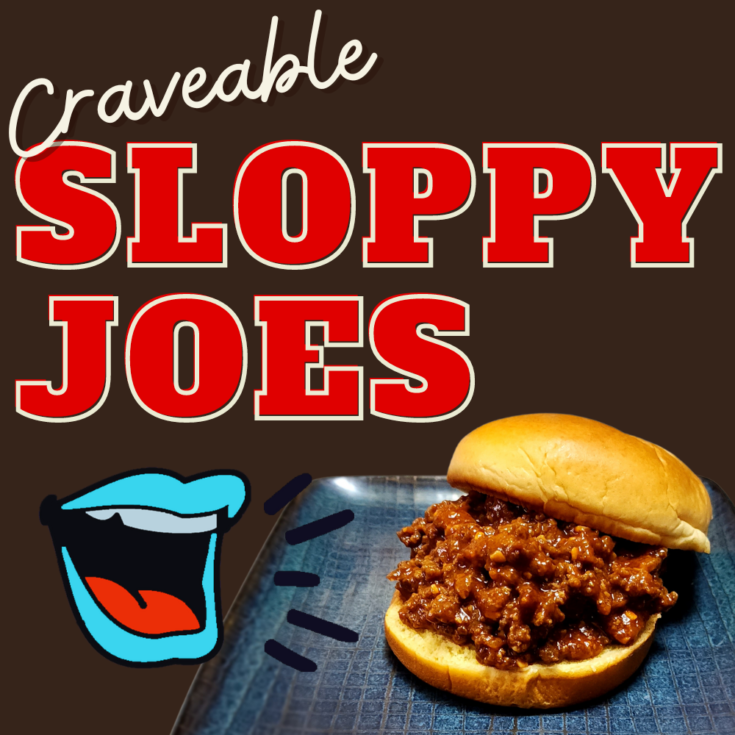
✔️ Please picky eaters
✔️ Satisfy hungry tummies
✔️ Feed everyone faster and with less mess!
Ingredients
- 1.5 lbs. of ground beef (leaner beef 90/10 will allow you to skip straining)
- 1/3 cup minced garlic
- 1 tsp pepper
- 1 tsp salt
- 1 sweet onion, finely chopped
- 3 tsp green hatch chili spice
- 12 oz tomato sauce
- 1/3 cup ketchup
- 2 heaping tbsp mustard
- 1/4 cup brown sugar
- 1/4 cup Worcestershire sauce
- Burger buns (sliced) OR Soft dinner rolls for some Sloppy Sliders
- ___________________________________
- Tools:
- Large skillet or pan
- Wooden spoon or spatula
- Griddle or grill (optional)
Instructions
- Heat a large skillet or pan over medium-high heat. Add diced onions and just enough olive oil to coat the onions. Caramelize the onions, stirring to ensure it does not burn and gets evenly browned.
- Add ground beef, minced garlic, salt, pepper, and hatch chili spice.
- Stir and break up the beef into fine pieces while it cooks. The goals are even browning of the beef and spice distribution until it is fully cooked.
- Reduce the heat to medium.
- If you use lean beef (15% or less fat), you may skip this step if grease drippings are minimal. Drain any excess grease and return the meat mixture to the pan. For this, I recommend using a fine metal strainer.
- Pour in tomato sauce, ketchup, mustard, brown sugar, and Worcestershire sauce.
- Cook the mixture over medium heat, stirring occasionally, until it reaches your desired thickness.
- If you'd like, you can warm the buns on a hot griddle or grill with a brush of olive oil or marjarine.
- Mound the finished meat mixture onto the bottom bun and top it with the other half.
- Now, savor the deliciousness of your homemade Sloppy Joes! Enjoy!
Sources
Primary & Secondary
- Woon, B. (1928). When It’s Cocktail Time in Cuba. Horace Liveright.
- Round 2 for Sloppy Joe’s Bar, a Havana Original. (2013, Jan 25). TODAY.com.
- Sloppy Joes .Org – The Legendary Bar in Old Havana. (n.d.). https://sloppyjoes.org
- Monti, F. (2015). Una nueva era dorada española? https://www.francoismonti.com
- Old Absinthe House | Historic French Quarter Bar. (n.d.). Rue Bourbon. https://www.ruebourbon.com
- Sloppy Joe’s Bar (1931–1939) – EUVS Digital Collection. (n.d.). https://euvslibrary.com
- 1932 Sloppy Joe’s (Season 1931–32). EUVS Vintage Cocktail Books.
- 1939 Sloppy Joe’s (Season 1939). EUVS Vintage Cocktail Books.
- The Associated Press. (2014, June 17). Hemingway: 5 places where he lived, drank, wrote. AP News.
- His Life — Hemingway Home & Museum. (n.d.). https://www.hemingwayhome.com
- Todscott. (2023). History of Sloppy Joe’s | Key West. https://sloppyjoes.com/history
- Bar | Sloppy Joe’s. JustKeyWest.com. https://www.justkeywest.com/sloppyjoes.htm
- Encyclopaedia Britannica (2023). Prohibition.
- Prohibition Profits Transformed the Mob. The Mob Museum.
- Pbs. (2021). Timeline: Prohibition.
- Jack Miller Center. (2020). The 18th & 21st Amendments.
- Freeman, J. (2015). Prohibition Postcards. postcard.org.
- Maid-Rite Corporation. (n.d.). Company Profile.
- The Story of Loose Meat Sandwiches. (2022).
- Luz, M. (2023). What makes Ropa Vieja so flavorful? Healthy Rican.
Misinformation References (for contrast only)
- Mires, N. M. (n.d.). Receta: Sloppy Joe a mi manera.
- Blue Apron Staff. (2023). Sloppy Joe History.
- Hutton, T. (2023). Feed Tavern & Table Co.
- The History of Sloppy Joes. Quaint Cooking (2022).
- Blitz, M. (2017). The True Story of Ernest Hemingway’s Favorite Bar. Food & Wine.
- Kay. (2019). Sloppy Joe: The Truth Behind Its Origins. Awkward Traveller.
Best Homemade Sloppy Joes
✔️ Please picky eaters
✔️ Satisfy hungry tummies
✔️ Feed everyone faster and with less mess!
Ingredients
- 1.5 lbs. of ground beef (leaner beef 90/10 will allow you to skip straining)
- 1/3 cup minced garlic
- 1 tsp pepper
- 1 tsp salt
- 1 sweet onion, finely chopped
- 3 tsp green hatch chili spice
- 12 oz tomato sauce
- 1/3 cup ketchup
- 2 heaping tbsp mustard
- 1/4 cup brown sugar
- 1/4 cup Worcestershire sauce
- Burger buns (sliced) OR Soft dinner rolls for some Sloppy Sliders
- ___________________________________
- Tools:
- Large skillet or pan
- Wooden spoon or spatula
- Griddle or grill (optional)
Instructions
- Heat a large skillet or pan over medium-high heat. Add diced onions and just enough olive oil to coat the onions. Caramelize the onions, stirring to ensure it does not burn and gets evenly browned.
- Add ground beef, minced garlic, salt, pepper, and hatch chili spice.
- Stir and break up the beef into fine pieces while it cooks. The goals are even browning of the beef and spice distribution until it is fully cooked.
- Reduce the heat to medium.
- If you use lean beef (15% or less fat), you may skip this step if grease drippings are minimal. Drain any excess grease and return the meat mixture to the pan. For this, I recommend using a fine metal strainer.
- Pour in tomato sauce, ketchup, mustard, brown sugar, and Worcestershire sauce.
- Cook the mixture over medium heat, stirring occasionally, until it reaches your desired thickness.
- If you'd like, you can warm the buns on a hot griddle or grill with a brush of olive oil or marjarine.
- Mound the finished meat mixture onto the bottom bun and top it with the other half.
- Now, savor the deliciousness of your homemade Sloppy Joes! Enjoy!